GRASSY PAVERS™ work as part of a complete layered system. Each layer plays a specific role in distributing load and managing water. From bottom to top:
💡 Tip: Proper sub-base preparation is the most important step. A well-prepared sub-base ensures long-term performance, load capacity, and drainage.
Excavate the area to the required depth for your application. Remove organic material, roots, and debris. Grade and compact the native soil to create a flat, stable surface. Install a geotextile fabric barrier, then add and compact the crushed stone base layer to the appropriate depth. Finish with a 1–2 inch leveling layer of washed concrete sand or fine angular gravel, screeded smooth.
Begin placing GRASSY PAVERS™ panels at one corner of the installation area. Panels interlock securely on all four sides — simply press them together until the connectors click into place. Work row by row across the surface. Panels can be easily cut with a hand saw, circular saw, or utility knife to fit edges, curves, and irregular shapes — no special tools needed.
Once panels are laid, fill the open hexagonal cells with your chosen infill material. For a grass surface: fill cells with quality topsoil to just below the top edge, then broadcast grass seed and lightly water. For an aggregate surface: fill cells with clean washed gravel or decomposed granite, screeded flush with the top of the panel.
Aggregate-filled installations are immediately ready for vehicle and foot traffic. Grass-filled installations should be kept lightly moist until germination occurs (typically 2–4 weeks depending on species and climate). Once established, the grass grows up through the open cells to create a fully permeable green surface that looks and feels like natural turf.
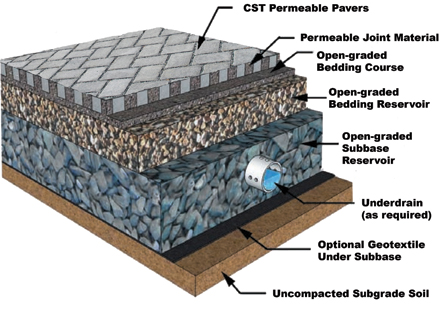
The depth and composition of the gravel sub-base is the primary variable in a GRASSY PAVERS™ installation. Select the appropriate specification for your project's intended use:
Pedestrian paths, ADA trails, golf cart paths, bicycle routes
For pedestrian and golf cart applications, a well-compacted native soil with good drainage may substitute for a full gravel base in some soil conditions. Consult our Specifications page for soil assessment guidelines.
Vehicles, fire trucks, heavy equipment, commercial parking
For fire lane and emergency vehicle applications, follow local fire marshal requirements for sub-base specifications. The GRASSY PAVERS™ panel itself supports 97,000+ lbs/sq ft — adequate sub-base depth ensures that capacity is fully realized.
GRASSY PAVERS™ cells can be filled with a variety of materials depending on the desired appearance, use case, and maintenance preference:
The most popular option. Fill cells with quality topsoil to just below the panel top, broadcast a suitable grass seed for your climate, and water regularly until established. After germination (2–4 weeks), the grass grows through the open cells to create a natural green surface. Choose a grass species appropriate for your sun exposure and climate zone.
For an instant green result, sod pieces can be cut and pressed into the open cells. This approach gives immediate visual impact but requires careful fitting and more intensive watering during establishment. Sod works well for smaller installations where coverage speed is a priority.
Clean washed gravel, pea gravel, or decomposed granite provides an all-weather, low-maintenance surface that is immediately ready for traffic. Aggregate-filled GRASSY PAVERS™ are popular for fire lanes, parking lots, and areas with high traffic or shade where grass is difficult to establish. Water still percolates freely through the aggregate infill.
💡 General: GRASSY PAVERS™ panels are made from 97% recycled HDPE — an extremely durable material that resists UV degradation, chemical exposure, and freeze-thaw cycling. Under normal conditions, the panels provide decades of service without replacement.