Sustainable Sites — Stormwater Design
Permeable paving that reduces runoff volume and improves water quality qualifies for stormwater management credits (Quantity and Quality).
GRASSY PAVERS™ are the environmental alternative to solid paving — 97% post-consumer recycled HDPE panels that let rainfall percolate through at up to 10 inches per hour instead of running off into storm drains.
Non-toxic HDPE releases zero pollutants — and the permeable system turns runoff back into groundwater.
Concrete and asphalt are nearly completely impervious — they have runoff coefficients of 95% or higher, meaning that 95 cents of every dollar of rainfall becomes surface runoff. This runoff carries pollutants, sediment, and debris into storm drains and waterways, overwhelming municipal infrastructure and degrading water quality.
Property developers, municipalities, and engineers specify GRASSY PAVERS™ specifically to meet stormwater management requirements without the cost and land-use impact of traditional retention and detention infrastructure.
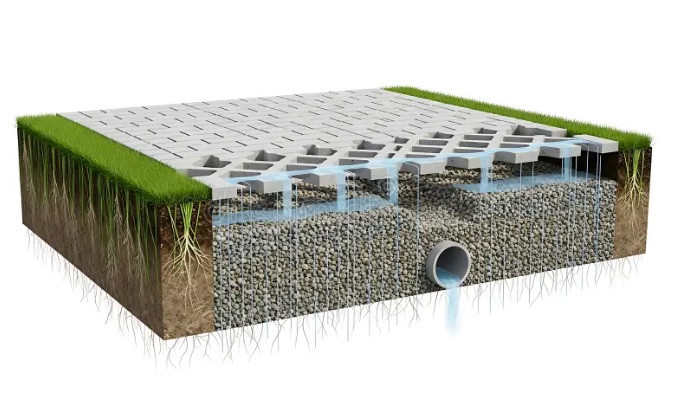
Every layer is engineered to move water from the surface to the native soil below.
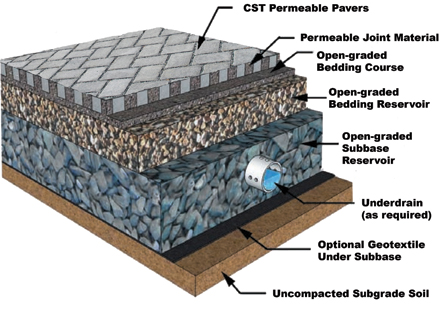
The GRASSY PAVERS™ system is engineered to move water efficiently from the surface to the native soil below:
The result: stormwater stays on your property and returns to the water table, rather than becoming a liability on neighboring properties or in municipal infrastructure.
GRASSY PAVERS™ are LEED point-eligible under the U.S. Green Building Council's Leadership in Energy and Environmental Design rating system — specified by architects, engineers, developers, and project managers pursuing certification for commercial, institutional, and residential projects.
Permeable paving that reduces runoff volume and improves water quality qualifies for stormwater management credits (Quantity and Quality).
Green, vegetated surfaces have a significantly lower solar reflectance index than dark asphalt, reducing heat island contribution.
GRASSY PAVERS™ contain a minimum of 97% post-consumer recycled content, qualifying for recycled materials credits.
Unique environmental performance characteristics may qualify for innovation credits depending on project specifics.
Consult your LEED project administrator or sustainability consultant for credit applicability specific to your project. GRASSY PAVERS™ can provide product data sheets, recycled content certifications, and stormwater performance data to support your LEED submittal.
Plastic waste diverted from landfills becomes a high-performance structural product.
When post-consumer plastic products (milk jugs, detergent bottles, industrial containers) are collected for recycling, they are sorted, cleaned, shredded, and melted into what the industry calls regrind — a raw polymer feedstock made entirely from recovered plastic waste. This regrind is then used as the primary raw material for manufacturing GRASSY PAVERS™ panels.
Each GRASSY PAVERS™ panel contains a minimum of 97% post-consumer recycled High Density Polyethylene (HDPE). This means:
The production of GRASSY PAVERS™ from recycled HDPE generates a fraction of the CO₂ emissions associated with manufacturing concrete or asphalt. Additionally, the permeable design eliminates the need for retention pond construction, detention structures, and associated piping — infrastructure that carries its own significant carbon cost. The full lifecycle environmental profile of GRASSY PAVERS™ compares very favorably to traditional solid paving solutions.
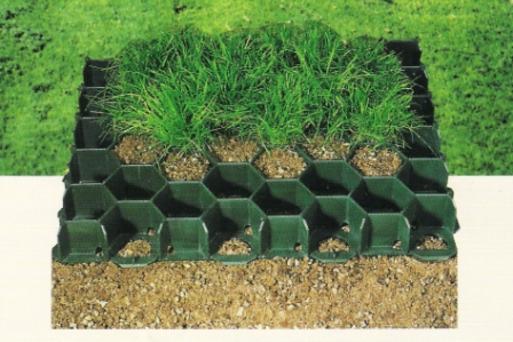
How GRASSY PAVERS™ stack up against concrete and asphalt on the metrics that matter.
| Factor | GRASSY PAVERS™ | Concrete | Asphalt |
|---|---|---|---|
| Runoff Coefficient | ~1.2% | ~95% | ~98% |
| Stormwater Percolation | 8–10 inches/hr | None | None |
| Groundwater Recharge | Yes | No | No |
| Retention Pond Required | Usually No | Often Yes | Often Yes |
| Heat Island Contribution | Very Low (vegetated) | Moderate–High | Very High |
| Recycled Content | 97% post-consumer | Minimal | Some recycled aggregate possible |
| Toxin/Leachate Risk | None — non-toxic HDPE | Minimal | PAH leaching risk |
| LEED Eligible | Yes — multiple categories | Limited | No |
| EPA Stormwater BMP | Recognized BMP | Not applicable | Not applicable |
Get technical data, recycled content certifications, and a shipped-price quote from CV Supply — nationwide from Columbiana, Alabama.